
I love this sort of thing–Feverish scribblings of a genius:
A LIBRARIAN at an evangelical seminary near Philadelphia has made one of the most important musicological finds in memory — because she decided to clean out a dirty cabinet in the building’s basement.
Heather Carbo has unearthed Beethoven’s manuscript score for a piano version of his Grosse Fuge, a work with almost mythical status in the music world. It had been hidden away and forgotten on a bottom shelf at the Palmer Theological Seminary, in the suburbs of the city.

I am captivated by Breaking Bonaduce–VH1’s “reality” show about Danny Bonaduce (childhood star of The Partridge Family–and if you never saw The Partridge Family then you might as well just stop reading here) and his family.
The premise of the show is that Bonaduce and his wife (who is really pretty and smart and seems cool) go to marriage counseling and we follow along. The tragic thing is that almost immediately the counseling exposes the cracks in this supposedly happy marriage.
What’s fascinating about the show, to me, is the honesty–at least it feels like honesty–with which Bonaduce exposes his foibles. But he doesn’t expose them to his wife, necessarily, it’s more that he needs the camera to give him this voice.
The show is gripping and horrible (especially in that we meet the couple’s children and so understand that whatever their father is doing will come back to haunt them at some point). It is a modern day tragedy and I am hooked and I am filled with sorrow for the family.
I’m also struck with the juxtapostion to The Partridges. I mean, here was a family who had every right to be broken–single mother, loads of kids, rock ‘n roll, slimey manager–but who were complete or who completed each other. They were happy. There were no skeletons, no abuse. But if there had been, they would have dealt with it and it would have been resolved in the next show.
And here is a Bonaduce, a product of this show, who has had more than his share of trauma and drama over the years, with everything to live for and yet what the show portrays is a man who is dying.
I hope he lives.

1) My buddy Laurie Frankel is a guest on the new talk show–Tyra Bank’s Show today (October 13th). She is billed as the “Breakup Expert”–so set your Tivo folks and catch this show because you won’t want to miss it.
2) Got this notice from my pal Mark:
If you’re in SF this Saturday, here’s something to do.
LitCrawl is a huge multi-venue event, part of the annual LitQuake literary fest. In three successive time blocks, dozens of writers and listeners throng bookstores, cafes and bars along Valencia St.
I’ll be taking part at 5:00 pm in the erotica-themed reading, with other Cleis Press authors Molly Weatherfield, Violet Blue, and Carol Queen, at Good Vibrations, 603 Valencia St. Sort of early in the evening for erotica, but there we are.
And a good friend, Katia Noyes, will be in the female authors-themed reading at 8 pm at the Lone Palm tavern, 3394 22nd Street off Guerrero, with Meg Waite Clayton, Micheline Aharonian Marcom, Bharati Mukherjee, Cornelia Nixon, and Sarah Stone.
Full LitCrawl schedule: http://www.litquake.org/index.php?p=321

I am writing this from my brand new computer. Not quite used to the keyboard yet but I think I might be in love (please don’t tell my iBook. I feel a bit like the boy forgetting about his Velveteen Rabbit).
Check out this great bit o’ writing by my pal Steven Gullion: The Last Three Times I Saw My Wife (and you better read it quick because it’s only live for one day).

Cool. The Missouri Review (one of my favorites!) has posted on its website a selection of work from 20 years ago. There’s much to choose from, but my heart skips a beat when it sees: Joy Williams and Amy Hempel.

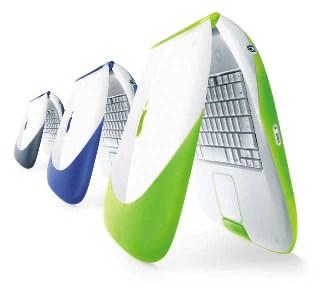 Today, at some point, my new computer will arrive. It is a Dell laptop with a large screen. I promise to honor and cherish my new computer. To not to spill water or wine on it and to not let crumbs fall into the keyboard. In sickness and in health. Amen.
While this may not seem big news to some, to me it is momentous, a cause for celebration.
Let me back up.
When I first started seriously writing (as opposed to when I was younger and wrote stories in my journal only for myself), I was in undergrad and writing for workshop. This was a time when the personal computer was not all that personal. People didn’t have them. Well, some people had them but they had not proliferated the market at all. They were expensive and they were clunky.
In computer lab in high school, I learned how to program the rolling dice–our program was stored on a cassette tape. Anyone else remember those days? So, this is to say, that when I wrote in college, I wrote long hand and then typed up what I wrote. Writing fiction this way was valuable in that it taught me the preciousness of revision, of getting it right–because there’s not much worse than fucking up a word at the bottom of the page and finding out that you’ve got no more white out.
But then in my senior year of college, something wonderful happened. And that wonderful thing was when my Brother word processor entered my life. Oh, how my world expanded! It had a floppy disc and a tiny little screen where I could see and edit what I’d written and then when I wanted to print, all I had to do was add paper to the built in printer. I felt like a god–I typed, I revised, I printed. And if there was a mistake in the manuscript, I revised and printed again.
It was nothing short of miraculous. (And on a side note, I still have that word processor. I can’t bring myself to get rid of it).
Then there was grad school and my trusty word processor came along for the ride and remained true to me as the life and the desire to write were sucked out of me.
And then came the dark years where only very bad poetry and angst-ridden streams of consciousness were scratched, under the cover of darkness, in a half-dozen or so journals.
Until I moved in with my boyfriend of the moment and started to use his computer to write. But I felt self-conscious, sharing that way and so never really let it go. Plus, by then we were on dial up and there was much time needed to spend reading News of the Weird and to have the cookie dough recipe sent to me in email.
And there was work and always a computer.
And then there was silence.
Until, nearly six years ago when I bought my iBook. I bought her because I felt it was time. Felt myself climbing back out of the abyss and felt myself ready to write again. And she has been good to me, but lately she’s started to show her age, has slowed down a bit, and has frozen up on me.
And it is time.
And even though I’m trying to simplify my life and get rid of stuff I no longer need, I will not get rid of her. She’ll stay in my closet next to my word processor, a reminder of who I was then.
So, I was going to take a bit of a break from posting here but I’m not going to anymore. I’ve found, that for me, breaks should be natural and not self-imposed. When I impose stuff upon self, self becomes obsessed with being denied.
It is a miracle that I quit smoking. And that I did it cold turkey. The first time, I failed after a few years, but this time it stuck.
So, anyway, I’m back.
Have been reading the powerful and shattering Reporters’ log: S Asia earthquake at BBC News:
I am looking at what remains of the main boys school in Balakot. Its green metal roof has collapsed on top of heaps of wood and stone rubble. Local people are pulling at the wreckage, just using their hands.
They are still finding many bodies underneath. I just saw two brought out and there are 12 more laid out nearby. People told me there were several hundred boys here when the earthquake hit. They believe most of them are dead.
The smell of decaying bodies hangs in the air. It is a similar scene across this devastated town, where at least 80 percent of the buildings have been levelled. Most of the market is destroyed.

I was cleaning out some of my bookshelves the other day when I found Brett Easton Ellis’s Less Than Zero. I decided to read it again as it had been many years (nearly 20?) since I had read it.
I remembered that it had left its mark on me when I read it the first time (As did Ellis’s American Psycho–which also ruined brie for me–and every other book of his that I’ve read). I remembered feeling depressed at the end but I didn’t remember why.
Now I remember. It’s not so much the ennui and malaise set up in the first half of the book as it is the horrific, graphic, mind-blowing and, ultimately, mind-numbing violence of the end of the book. And this dichotomy is one of the things that makes it fascinating as a text.
For the first part of the book you are to become voyeur to the lives of these spoiled rich kids and shake your head with wonder at how their lives are so empty and yours, in comparison, so full. So you fall into that trap of believing that though you are not wealthy, your life is rich and this, you believe, is what this book is telling you.
But no. That is a cliche and it’s not that simple.
As you read on what you learn is that part of what we are seeing is a survival technique–something we all have within, which is the ability to shut down emotion when we become overloaded.
And that’s what it is. Overload. Overload on sex, money, drugs, violence and overload on loneliness, emptiness, depression.
It is with the violent scenes (and they are horrible–I forgot how horrible and had to fight the urge to shut my eyes as I was reading) and the reactions of the characters to these scenes (the snuff film, the gang rape of the drugged twelve-year-old girl, Clay’s reminisence of the guy–who later goes on to become American Psycho–who killed and mutilated the woman) that we understand part of where we are as a culture.
And that is that many of us are dead inside. Walking dead. Zombies. Automatons.
And that is tragic.
One could point to any of the physical stimuli in the book (video games, music videos, clubs and dancing, sex, drugs, etc) as a cause but that would be wrong–or not the whole picture. The message that is brought to the forefront again and again is that these children have been deserted. Their parents are gone (and if they are not gone, they are vacant) and the young ones left to fend for themselves.
And so they are on an island. They are living out Lord of the Flies.
And just as Lord of the Flies is still relevant today, so is Less Than Zero.
If you added cellphones, references to different designers, music, and drugs (and perhaps make one of the young women a cutter instead of anoretic), Less Than Zero could easily be about 2005.
And that is scary. And that is sad. But also telling about the strength of the writing–to be able to capture a moment in time and allow it to exist outside of time.
I’m glad I read this book again. Even though Ellis’s books depress me, they open my eyes and they make me feel something for his characters who feel nothing.
If you are going to try to rip me off, please don’t insult my intelligence by having typos in your email:
We recently have determined that different computers have logged onto your PayPal account, and multiple password failures were present before the login. One of our Customer Service employees has already tryed to telephonically reach you. As our employee did not manage to reach you, this email has been sent to your notice.Therefore your account has been temporarily suspended. We need you to confirm your identity in order to regain full privileges of your account.If this is not completed by Octomber 11, 2005, we reserve the right to terminate all privileges of your account indefinitly, as it may have been used for fraudulent purposes. We thank you for your cooperation in this manner.To confirm your identity please follow the link below:
This info was passed on to me by a friend and now I am passing it on to you:
FOR IMMEDIATE RELEASE
CONTACT: Theodore Q. Rorschalk Founder and Chairman, TQR
tqrchair@gmail.comInnovative Lit Zine Launches on October 15
TQR Makes the Editorial Process Visible to Readers and SubmittersAlbuquerque, New Mexico (October 5, 2005) — The pilot issue of TQR, an online literary magazine whose motto is Stories Are Our Business™, will go online October 15. TQR will be different from other online literary magazines and aims to embrace the strengths of the Internet—its transparency, fluidity, immediacy and intimacy—and use them to create an entirely new e-zine experience.“Unlike most other online magazines, TQR is not a print-magazine wannabe. We are an online magazine that will take advantage of the unique features of the Internet in a way that has never been seen before,” said TQR Chairman Theodore Q. Rorschalk (a pseudonym for an experienced fiction writer and editor whose writing has appeared in well-known literary magazines online).
Behind the TQR Motto: Stories Are OurBusiness™
TQR borrows its structure and jargon from the world of big business. There are several reasons for this approach, according to Mr. Rorschalk. First, TQR believes that stories should be viewed as being real, essential capital that stands the test of time; thus editors are called “capital managers” and readers are called “investors” because by reading TQR they are investing their valuable time. Second, TQR’s persona-based, meta-drama aspect mirrors the corporate environment with its soap opera of dirty tricks, backstabbing, and power plays. Lastly, the business model allows TQR to jettison the tiresome, indistinct notion of “art for art’s sake,” and show story vetting as a specific, repeatable, step-by-step process that invites debate among staff on what elements make a good story.TQR’s Unique Editorial Process
At the start of each quarter, all submitted stories begin on the Floor where the first team of editors, called “capital managers,” either reject the stories (known at TQR as “capital”) or pass them along to the next level, the Terminal.At the Terminal level, the “capital managers” may mention the specific titles of the works being judged in editorial meetings in the Conference Room, or discussions in the Terminal’s Free Market office. All discussions will remain positive, concentrating on stories’ “capital successes” instead of their failures. A rejection gmail from The Terminal will tell the writer what it was about that particular piece that kept it from being passed on to the next level.
The works that survive the Terminal will go on to one of two TQR departments, depending on whether the Terminal deems the story to be “genre” or “spec lit fic.” The former group will go on to The Quarterly Report; the latter to The Quarterly Revolution. The respective department heads (Tessa Quinlan-Renaud and T. Quincy Rockefeller—again, pseudonyms for two highly skilled fiction writers) will then winnow their “capital” down to two or, at most, three pieces. The rejected works will get a personal gmail from Tessa or T. giving the reasons the piece didn’t make the final cut.
The last stage takes place in the Conference Room where the capital-cognizant Theodore Q. Rorschalk hosts T. and Tessa for a no-holds-barred, real-time confab (open to the public, of course), wherein each department head makes his or her case for the works that he or she has chosen. At this point, not only will the works’ titles be cited, but the authors’ names will be used as well, owing to the fact that who wrote a piece might be just as much of a “selling point” as the piece itself.
TQR, where Stories Are Our Business™, is a quarterly online literary magazine at www.tqrstories.com. TQR features fiction in any genre from 4,000 to 12,000 words in length. TQR publishes three works per quarter and pays $50 per published piece. Submitters are warned that their stories may be discussed in detail, during a process that is visible to the reading public, at the later stages of the editorial process.
Go to www.tqrstories.com for detailed information about submitting stories andTQR’s unique evaluation process.
# # #

 myfanwy collins