
Pia Ehrhardt, who evacuated from New Orleans and then Houston, went home this past weekend. Her account is heartbreaking, beautiful, hopeful–read it here. And if you see the birds, tell them to go home to NOLA where they are needed now more than ever.

Okay. Listen up (don’t you hate that phrase “listen up”? It’s totally gym teacher vernacular: “Listen up, girls!”–not that there’s anything wrong with gym teachers but you know what I mean).
Anyway, listen up. I want you to go to this site and listen to this music and then buy the CD because, trust me, you’ll love it:
Sold the Home for the Tackle Box
Okay? Thanks.

Miss Snark posted this link to Times Magazine’s 100 best books published since 1923 from . It’s an interesting selection. Which ones have you read? Any favorites on the list? Any that you detest?

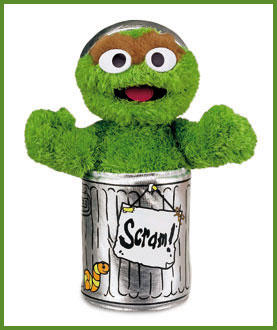 For the past couple of weeks I’ve been cleaning, divesting, tossing, shredding, bagging up, dumping, recycling, whatevering all of the old stuff I no longer use or need. It is time to let go–if for no other reason than when we move again I would like to have a smaller truck.
I am not much of a packrat but I have certain items that I’ve clung to, such as each and every notebook I used and paper I wrote in college and grad school. I had them all stored in a dozen or so accordion files in a couple of large plastic tubs.
Why have I kept these things? I wonder if I felt they defined me. My mother never graduated from high school let alone college (though you could not tell that from meeting her) and my father died too young for me to take advantage of his education and intelligence. Anything I learned was hard won. I had to work my way through school and had to lose sleep in order to study. While my peers were out getting wasted, I was working in my family business for tips. But now I know that what I’ve learned doesn’t exist in a file folder.
I found my writings from my first creative writing class in undergrad. The professor was a poet but the course was to focus one half on poetry and one half on fiction. The backstory is that this particular professor was extremely fond of one of my older sisters who had gone to the same university. She was an exceptional poet and the star of the department as such.
I was not an exceptional poet, and, at the time, was distracted and not invested in my work. I had transferred schools after freshman year, only to end up exactly where I did not want to be–close to home in order to help out with the business. I took this course mostly because my sister’s poems had turned me inside out and I wanted to be able to do that to someone. But really, I’d been writing fiction since I was a child and didn’t realize then that there was so much more for me to learn.
My poems were horrible, embarrasingly so, and the professor cut me to shreds (as well he should have!). He was cruel and sarcastic and I don’t know how I didn’t come undone, but he was also right.
Did he help me become a better poet? I don’t know. I’m better than I was then but still not great and, honestly, I didn’t write poetry for a long time after that class. My fiction, though, that was a different story. Then he couldn’t get to me so much. In his comments, he expressed surprise about what I had written. Apparently, my poetry was so bad that he must have questioned whether I could write at all. I must have felt like I’d won to have gotten those comments. Actually, in reading his comments now, I still sort of do feel that way.
What I remember distinctly about that class now, is not anything he taught us, per se, but how he brought a visiting writer friend of his in to lecture us one day and the man told a story about how he was dating Judy Collins (now, I’m second guessing my memory) and how they were in Paris one November. He spoke of the light, the colors, his emotions. It was stirring and I remember leaving the room that day feeling as though I’d been somewhere.
Other memories are of the hippie girl whose brother died half-way through the course and she had to leave school (she came back though) and how the professor had our class and another of his to his bungalow for an end of semester party just before break. I was completely out of my element and fearful that people would find out I was a commuting student, which was almost as bad as being a townie (actually, it might have been worse) in the eyes of many. The party was awkward for me. The wine was bad and we were all underage but we drank it anyway. I drove home chastising myself for being shy. Hating myself for lacking talent, for not being a star in his eyes. Wishing I was other.
Then there was another fiction course and the professor was a writer of short stories. That was his love. And he was kind and open and empathetic and he gave us the best stuff to read. He encouraged me unabashedly and wrote on one of my stories, “I wish I had written this well when I was in college.” And later, “Keep going. You will be published one day. I promise.”
I don’t know if he could have known what those words meant to me then, and still do. Those stories and the ones from that other class, I keep–to remind me where I’ve been and where I’m going. To remind me why.
Then there was a time when I believed I would be a scholar. That I would finish my thesis and go and get my PhD. But I didn’t and I won’t. The truth is that grad school (I was going for my MA in literature and completed my two years of coursework) left me cold. Deconstructing literature left me deconstructed. I learned a lot in my course work but by the end of it, I felt I never wanted to read or discuss literature again. It may have surprised many people in my life that I ran away with the circus after grad school, but to me it was the most natural next step.
But in cleaning, I found all of the notes for my unfinished thesis. I will not bore you with the details of what it was on (for truly it is boring) but the process, I must admit, of discovery I went through is still fascinating to me. I love especially rereading the notes of my thesis advisor, whom I chose specifically because he was a hard ass. He wrung me through the wringer many a time–pointing out the holes in my sloppy argument and my lapses in clarity. And he was right.
Then I found the last thing I gave him–a clean draft of the introduction and first chapter. His note to me was jubilant. The final line of it was, “Nothing can stop you now.”
But something did stop me. Poverty and the need for a job. Also, a desire to break free and rediscover what it was I loved about literature and writing. Still, it makes me sad that just as I earned his hard-won approval, I was too beaten down to know that I needed it. But that I keep, too.
Nothing can stop me now.
The Autumn issue of Ghoti (takes a while for the page to load the first time–might require a refresh) is live. There you will find work by: Kim Chinquee, Paul Toth, Girja Tropp, and me (in inexplicably small font).


A couple of months ago, my friend the beautiful and talented Kat, sent me a copy of Mary Robison’s brilliant collection Tell Me and when I read it knocked my socks right off and made me ache for days.
After I got over my heartache, I sent a gushing and heartfelt email to Mary Robison, letting her know just what her stories meant to me. She responded with such impressive grace and humility that I was determined to read as much of her work as I could find, for not only is she an amazing writer but she’s human and humane as well.
Today I finished reading her novel, Why Did I Ever and am once again floored. This is the story of Money Breton, her children–Mev and Paulie, the men in her life–Hollis and Dix, the people she works with and for, and the odd cast of characters she meets in her daily wanderings.
Told in short flashes and blurbs with only the occasional scene that is more than two or three paragraphs, and with Robison’s dry and spot on humor and her characteristic ability to make you cry without even trying, this book is nothing short of brilliant as it weaves the reader through the addled and complex brain of Money, script doctor, lover of bad men, mother of lost children, and sufferer of ADD.
Ultimately, this is the story of how Money falls apart and comes back together, continuously, and just keeps on living. She lives despite the fact that her daughter is addicted to methadone and despite the fact that her son has been brutally raped and because of that is imprisoned in a witness protection program. She lives despite the fact that the people she works for are crazy and produce crappy movies (which she writes) and despite the fact that the men she spends time with are all wrong. She lives because everywhere she sees herself or a there-but-by-the-grace-of-god version of herself. Her friends are the Deaf Woman next door and the version of herself she talks to and her cat who keeps running away, only to die in the last section.
But Money keeps going. Because that’s what you do:
Hey, Joe in the CD player and now most of the men of my town are following me. Although, according to the mirror, which does not lie, I look like a Smurf doll. So I’m wondering, and would like to know, what must life be like for young attractive women?
“Pay attention to the fucking sunset,” I tell myself, but I’ve been out here too long, I can barely keep awake.
“My dear, my dear,” I say, “it’s getting kind of late.”
So, go home, I guess. Some sleep wouldn’t hurt.
Like Money, Robison takes risks and, in the end, they pay off. Read this writer, is what I say. You won’t be sorry.
Today after countless days and inches of rain, the sun is shining. Along with the sun comes a strong wind, which they tell us to be wary of. The ground is saturated and the tree roots have nothing to grip hold of and so they may topple in the wind. Not much comfort when your house is surrounded by tall pine trees.
But we are happy because we did not flood though our brook is high. And now that the brooks are full, we can get snow. This is what Allen’s grandmother told me last year, “It can’t snow until the brooks are full.” We can’t figure out why this is so but it seems to be true. I need to find an old farmer to ask.
If you have about ten minutes to spare, you might want to use them to fill out this poll:
Do you have an opinion on the political issues of the day? PollingPoint wants to hear about what you think of Katrina management, President Bush, the economy, the war in Iraq, and other issues in this short poll on American politics. Let your voice be heard!
Your answers will be completely confidential and will be used only for measuring public opinion. PollingPoint will never try to sell you anything or release your personal information.
Survey Topic:October 2005 News

If you read nothing else today, please take a few minutes to read this haunting poem, which is a taste of Ink Pot #7, on sale now:
Veiled and Unveiled, by Michael Salcmann

The word of the day, the week, the month, the year is most definitely: rain. As in, it is pouring once again. The state I live in is officially saturated and the small brook on the side of my house that is dry for most of the year is now threatening to overflow its banks. My driveway, in such situations, becomes a stream, and then a lake.
At this point, it is merely unpleasant in my neighborhood. I do hope it stays just that and no more.
We live in a bog and on the edge of a flood plain–there is always water and just that bit more–well, who knows what could happen?
Tomorrow the sun may shine. So they say. But we’ve heard that one before.
For now, we have rain. And more of it.

Okay. I know I’ve discussed this before but recent news makes me ask once again: Exactly how fucked up do you have to be to try to steal someone’s UNBORN child??? Thankfully, the mother and baby have survived:
The neighbor charged with attacking Oskin had a bassinet and a baby swing waiting at her home, but there was no indication she was pregnant, authorities said. Peggy Jo Conner, 38, is jailed without bail on charges of attempted homicide and aggravated assault.
Why is there a war against pregnant women in this country (this world?)? It is terrifying and I wonder what sort of freakish, hormonal collective unconscious is at play that these sorts of things are happening more and more often.

 myfanwy collins