
Swivel issue #4, which features a story by the one and only Pia Ehrhardt, is now available for order.
You better hurry up and get yours.

The Spring 2006 issue of failbetter is live. Included, along with the fiction, poetry, and visuals in this issue, is an interview with Anne Tyler, who says:
When I’m working on something, I proceed as if no one else will ever read it. It’s the only way I can write unself-consciously. Not until the final draft do I force myself to remember that I’m going to have to think about how it will affect other people.

The Hermit’s Story by Rick Bass is one of those books that makes me want to never attempt to write another story again because I can never, ever make one good enough–not one like these stories of his. These stories are special.
It is an astounding collection of stories about men and women who are frozen into place and yet breaking free time and again (ice and the underworld play a large part in many of these stories), and much like the deer that the narrator of “Two Deer” saves from the lake, they both fear and wish to be saved–they are all looking for their own personal savior, one who will show them the light of their life, their own miracle:
Once on shore, I pulled the deer out of the canoe and put it over my shoulders. I carried it up the mountain and then turned it loose deep in the woods, in a cedar jungle where I knew there were neither wolves nor coyotes–too thick and tangley for them. I watched the deer run off. The ice had frozen into a glass coat around the deer, and as the deer ran, the ice shattered and tinkled. It was like a kind of miracle.
What the characters of these stories know, or learn, is that your beloved is also the one who will prey on you, like the wolves who lead the deer onto the thin ice in winter (again, from “Two Deer”). It is all part of nature’s plan for us:
It’s like trying to say, “Let’s not let each other become small or weak or diminished.” It’s like saying, “There will always be some amount of ice beneath us.”
It’s like saying, “We must go on, I love you, there is no choice.”
In the end, these are stories of redemption. Of learning to let go of the past and to remember again. They are stories of remembering and forgetting, of letting go of this life, and being reborn into another.
Each of the ten stories in this collection has something wonderful in it, but my favorites are those that brought me right to the edge, the abyss, the shores of Lethe, and set me free–“The Hermit’s Story,” “Swans,” “The Cave,” and “Two Deer.”
Buy this book and read it and then read it again.
New in The Angler:

 My first daffodil of the season.
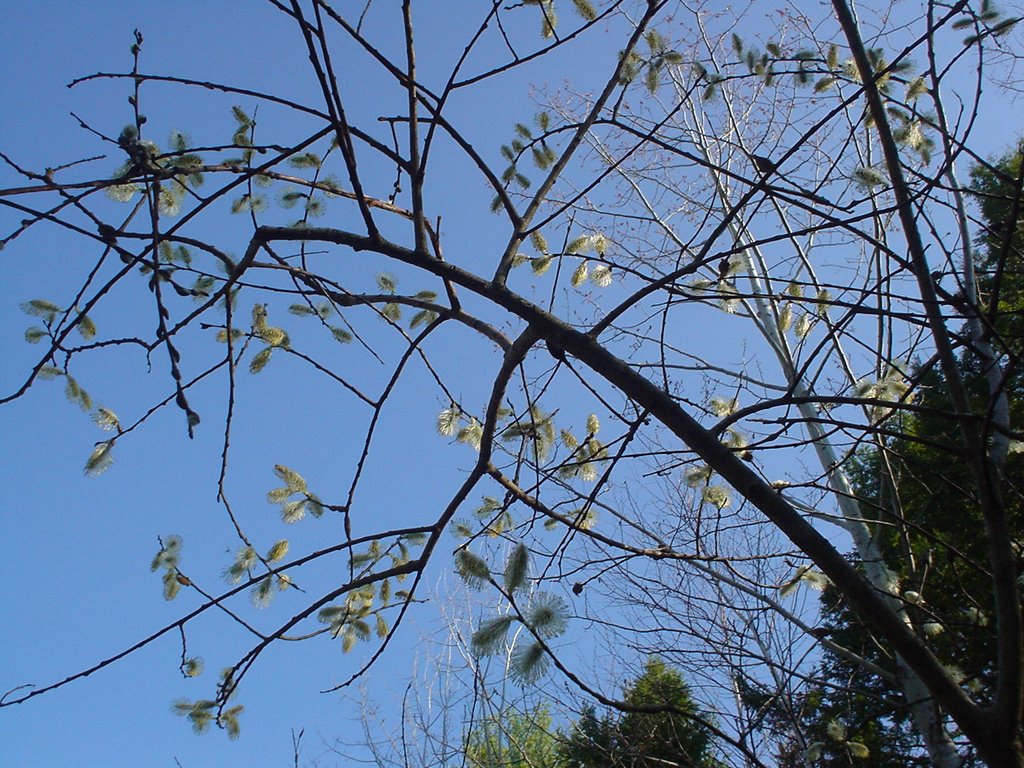 Some pussywillows on my street. It was such a mild winter that these have wanted to bloom since February.
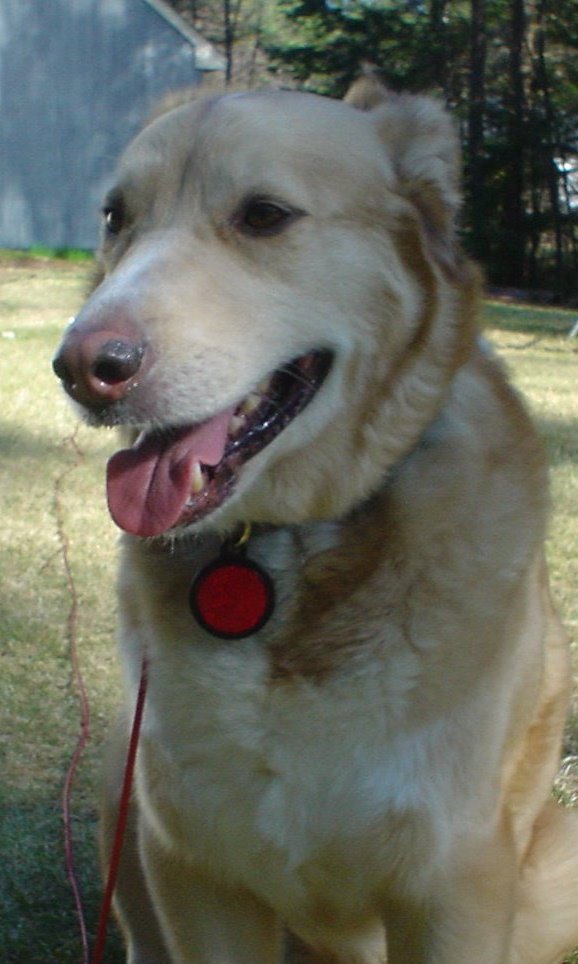 It’s already too hot out for Darby. I’m surprised he’s not shedding yet, but that will come soon enough.
 Here he is hunting for grubs because he likes to eat them. What can I say? He’s a dog and has a questionable palate.
Have just been playing around with Gnooks:
Gnooks is a self-adapting community system based on the gnod engine. Discover new writers you will like, travel the map. of literature and discuss your favorite books and authors.
It’s an interesting concept, but it seems to be just another take on the Amazon referral engine.

 This is an image from five years ago this October. I was climbing one of the dunes in the Great Sand Dunes National Park (you didn’t know there were sand dunes in Colorado, did you? They are in the valley of the Sangre de Cristo Mountains and they are spectacular).
We got to the top, caught our breath, looked around and then rolled and rolled down. Sometimes the speed of our decline was such that it was painful as we hit the sand, but mostly it was bliss, without compare. Spring makes me feel like I am traveling up and up and waiting for that exhilarating thrill of rolling down those sand dunes.

Just finished reading the Spring 2006 issue of The Kenyon Review. There was much remarkable writing within the pages, but the piece that cut right through my brain was the excerpt from Brad Kessler‘s Birds in Fall (which is a book I feel I now must get), which starts ominously–warning the reader that there will be an “ordeal” on this seemingly normal plane ride. Yet, that warning is quickly forgotten as we are charmed by the woman and her cello case sitting next to the narrator, just as he is. He keeps trying to engage her with bad jokes, but she will not have it.
Soon, though, as things begin to go awry, as cabin lights flicker and go out, they become as close as two people can be–they share that moment of waiting for death. But do they die in this instant? We do not know. All we know is that it is terrifying and beautiful and the narrator comes as close as he can to being the birds he studies–from air to sea, diving, hoping to swoop back up and yet making contact:
I could see the bones beneath my flesh like pieces of pottery. And then we were entering the sea.

Susan DiPlacido does it again. Yup. She nails last night’s American Idol:
We learned this week that as far as celebrity mentors go, dead men come off best because we don’t compare their bad plastic surgery. We learned that you don’t willy-nilly try to bastardize a legendary band’s arrangements, even if they’re shrooming. We learned that Paula’s not shrooming, she’s just her garden-variety drunk as usual. We remembered that Freddie Mercury is a rock legend, but that doesn’t stop us from putting him through the commercial grist-mill that is American Idol, or stop his band-mates from pimping themselves in such a manner.

Katrina Denza has another great Lit Mag Roundup available at MoorishGirl–this time Kat looks at Subtropics, Bellevue Literary Review, and Passages North.

Maria Flook‘s Lux is an offbeat novel, which I enjoyed quite a lot. One part mystery, one part fairy tale, and one part nod to Edgar Allen Poe and Nathaniel Hawthorne, this book draws the reader immediately into the wild and beautiful world of life on the fringes of Cape Cod.
At the core of this book is instinct–the good and the bad: That to nurture, to mother, to scavenge, and to prey. Alden Warren exemplifies these instincts, not only with her desire to take on a foster child (much like one animal will foster another baby animal in the wild) but also in her relations with men:
Left on her own, Alden had opened her door to suitors, but they were just “filler” until Monty returned. She sometimes believed that she brought out the predatory and, even worse, the scavenging instinct in these men. Men would gladly pick over her bones, feeling no responsibility for what had befallen her. That was her husband’s fault.
Beside Alden in instinct, is Lux–the man who secretly loves her and who also killed her husband, out of a sense of protection and desire. He acted out of instinct and yet, since birth his instincts have been skewed incorrectly: When he is under stress, he freezes. He is like a deer in the woods that stops moving when it spies a hunter, making itself a perfect target. Alden seems to be the one person who can break through his catatonia.
The sense of place of this novel is at once familiar (and beautiful in that familiarity) and yet otherworldly. I would go so far as to say that without all of the trappings of modern life, this narrative could easily have taken place in the 19th century, which is it’s special charm.
With narration that leaves the reader wondering what is real and what is fancy, with odd but carefully crafted characters, and with gorgeous descriptions, this book will stick with you long after you have reached the end. Read it.
 Roger Morris’s book Taking Comfort has just been published with the Macmillan New Writing initiative. Here’re some photos from the release party.
Congratulations, Roger!

 myfanwy collins